• Fear of Change

    During a recent vacation, I was snorkeling, swimming through the shallow water of a beautiful lagoon with white sand at the bottom. The sun was up high and the sea floor  was bright. Then I approached a drop off where the shallow seafloor fell off to unknown depths. As I approached the edge, the scenery in front of me started to look a little scary and my heartbeat accelerated. Instead of bright sand right underneath me, I was now approaching a dark blue. My eyes, still460b3a6374b74b8d38a17f176892248a conditioned by the bright reflective sand, had trouble seeing any details in the deep, dark blue beyond the edge. Although I’m an experienced snorkeler and even scuba diver, I felt a little weary, not knowing what to expect. Then my eyes adjusted and I was able to see more of the details underneath me. As I held my breath and dove down to the seafloor 15-20 ft underneath me, I saw small blocks of coral and fish. While the deep blue initially created the illusion of a a lot of depth, I realized this areas wasn’t all that deep. After just a few minutes in this new environment, I felt very comfortable. This area was actually more exciting for snorkeling and looking back at the shallow lagoon, I almost felt silly for being weary about this deeper area.
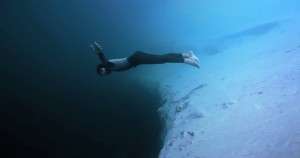
    Taking a step back, isn’t this how we all feel when it comes to dealing with change? We all have our home turf where we’re comfortable. We know our surroundings and are at ease. Then we head towards change. All off a sudden, things aren’t quite as clear any more and the unknown may make us weary and nervous. We don’t know what’s “out there” and we can’t discern the details yet of what we’re going to encounter. We react emotionally and with fear. But once we allow ourselves to be exposed to the new environment, we see it’s not all that scary and we may actually enjoy it. We get to see the details of our new surroundings and become comfortable. Looking back, we may feel silly about having reacted with so much unease. In the end, we extend our comfort zone and the formerly foreign territory ends up becoming part of our home turf.

    So what can we take away from this? Fear of change is normal and some may argue even a hardwired response (think “fight or flight” reflex). But although in today’s world change may be unavoidable, there are a few things we can do to ease the transition:

    • Know that your response is “normal”.
    • Allow yourself to go through the readjustment process.
    • The more quickly you explore your new environment and become familiar with its particularities, the more quickly will you feel comfortable.

    In the end, change is part of everyday life and we all have to deal with it. The more often we experience it, the sooner we realize frequent change is the new norm and while fear of the unknown is normal, going through it consciously and deliberately will hopefully take the edge off.

  • Why Your Photo Library is taking over your Computer

    Like many of you have properly observed, your photo library is getting out of control. Every year, you seem to be taking more pictures than the one before and, oh by the way, the resolution of your cameras (point ’n shoot, cell phone, etc.) is getting higher and higher too.

    As a little programming exercise, I analyzed my photo library going back to when I starting collecting digital pictures (for Mac users, check out your own photo library with this little program). Here’s what I found out:

    • Between 1996 and 2002, photo sizes were basically flat at 0.15 MB per picture.
    • Starting with 2003, the average image size increased by 58% on average annually (from 0.15 MB to ~3 MB per picture; and I’m not using super high-tech cameras, otherwise the sizes would be significantly higher)!
    • Over the last 10 years, the average count of pictures taken per year increased by 41% annually!
    • During the same time, the increase of total storage increased by 35% on average annually (without accounting for meta data, duplication due to editing, etc.)


    ScreenShot2015-07-05at8.57.47PM
    (The year 2005 is somewhat of an anomaly due to high-res, professional wedding pictures.)


    Bottom line: total storage space required for pictures is growing exponentially. Although the number of pictures one can take per day is probably going to top out somewhere (hopefully somewhere below 1 picture for every minute of the day!), the resolution will keep climbing, at least for a while.
    With the introduction of SSD drives, storage has become faster, but the cost per terabyte is still higher than for regular hard drives and capacity ultimately will have a hard time keeping up with the exploding demand, especially for the ubiquitous laptops. (If you’re working with a lot of videos in addition to images, all bets are off.)

    Where does all this leave us? I believe that ultimately the solution will be to store all these pictures not on your hard drive, but in the cloud. Photo management software will eventually need to adjust and store only a subset of your library on your drive, maybe in the form of thumbnails and meta data (Apple’s new Photos app is already moving in this direction). For viewing and editing of your pictures, the originals would then have to be downloaded on the fly. All of this not only requires a fast internet connection, but also trustworthy, reliable and affordable online storage. At the end of the day, few us will be able to store our own photo libraries on our own systems any more. The software (and storage) vendors will have the challenge to make this experience seamless and reliable. But in the end, that’s probably the only way to make photo storage sustainable.

  • The Walking Dead and LOST

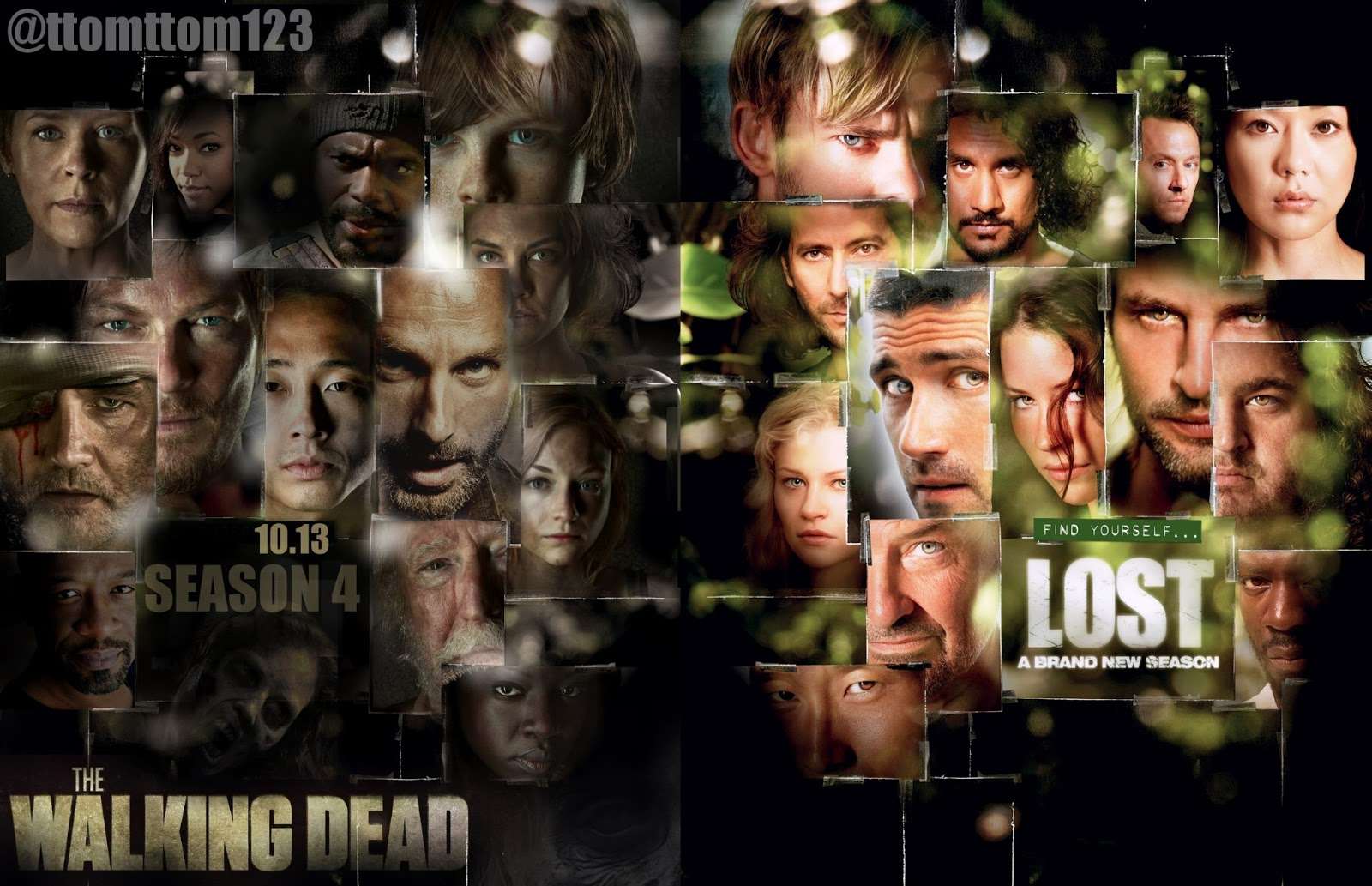
    I’ve been watching The Walking Dead from day 1 and I’ve mostly liked it from the beginning, but starting with the latest season (5), especially since episode 10 (“Them”), I’ve been noticing echoes of and similarities with my all-time favorite show, Lost. The parallels are not too obvious or strong, but bear with me and tell me if you can’t see it as well.

    WalkingdeadANDLOST

    Here goes:

    • Rick, cop, versus, Jack, doctor. They lead the group and like to fix things. Both have a dark side and sometimes lose control.
    • Token Asian guy(s), Glenn and Jin (& Sun).
    • Black religious dude who’s a little cray cray: Gabriel and Mr. Ekko with a dark past.
    • Both groups are lost in their own way and it’s less about island mysteries and walking zombies, but about people, relationships and people finding themselves. Both are seeking redemption from past lives and deeds.
    • Carl ~ Walt?! And then there’s Rick’s baby and baby Aaron.
    • Aaron shows up who – without hiding it – happens to be an “other”, just like Ethan Rom.
    • Alexandria and “Otherville” – a bunch of dirty, raggedy survivors are shocked to find a seemingly quaint, normal, “modern” oasis with houses, running water, electricity and a community life that seems to defy the world around them.
    • Rick, now part of this community, is planning to challenge and maybe overthrow this new community. Isn’t that a little bit like Jack scheming against the Others while held on Hydra Island and later Otherville?
    • Like the outsiders live in Alexandria amongst the original inhabitants, the Losties lived amongst the Dharma initiative in the 70s during time travel days. Until certain evens bring about conflict and fighting.
    • Deanna, a smart, maybe deceitful, woman is leading the new community. The actress reminds me of Isabel, judge of the Others, although in a way she may otherwise compare more to Ben.
    • Darryl, a person at the edge of society, kind of an outlaw and very good with bow and arrow, may be a cross between Kate (on the run from the law) and knife man himself, Locke.
    • Episode titles, hello!? “Them” and “One of Them” (Lost season 2).
    • The show is an long, convoluted journey for a group of people with a lot of main characters losing their lives eventually.
    We’ll see how The Walking Dead develops over time. Maybe the parallels are temporary right now, but at least for now I’m seeing them more than ever in the past.
  • Working out 7 Days a Week!?

    If you’ve read my earlier post about losing weight, you’ve already heard about the boost to my workout routine. At this time, I’ve been working out 7 days a week for – I’m not even sure – 2 years or so (apart from 1 day, as far as I can remember). Yes, you’ve read that right: 7 days a week! No matter the weather, rain or shine, whether I’m traveling, domestically or internationally, vacation or work days, sick or not. When I’m on the road and my day daily routine is off, I make it happen, even if it’s at 5 in the morning or 10 at night.

    Why on earth would I do this? Well, it was part of my effort to increase my regular calorie burn. But that’s not all. Exercising, which I normally do after work, helps me refresh and reboot myself after a long day at work and I always feel better afterwards. It’s become part of my daily routine. Without it, I feel cranky, my muscles are tense, and my mind feels tired. Nowadays it’s just part of what I do. Period. Side benefit: coming home from work, my focus is to get out and work out as soon as I can which makes me only eat a quick and light dinner or even replace a meal with a nutritional shake. That makes it much less likely to overindulge on dinner and consume too many calories.
    534988_567713383276425_1780417856_nOkay, you might say, but is working out every day healthy? Doesn’t the body need time to recover in between workouts? I thought so too, but I can honestly say that I feel great and energized. I don’t feel my body screaming (or whispering) for an off day, no fatigue or overuse (as far as I can tell). It may have to do with this: If I can help it, I never do the same thing more than 2 days in a row; ideally I do a different form of exercise every day. My main stay is Tae Kwon Do (usually Tue/Wed/Sat). If I’m not in the Tae Kwon Do studio, I go running. If I’m not running, I play tennis. If I’m not playing tennis, I hike or swim laps. In winter, I might be able to work skiing in. Key is I do something at least moderately intense and work up a sweat. Since each of these workouts emphasizes different muscle groups and varies cardio/anaerobic, strength, stretching, etc., I can get away without fatigue and overuse.
    Yes, on occasion and injury can occur (I sprain a joint or muscle, etc. – hey, Tae Kwon Do is a contact sport and I’m not 20 any more). Then what? Well, I’ve always been able to work around it. If the knee problems come back that I’ve had since I was 16? I go swimming. Calf muscle is acting up – hiking usually works better than running. Back sore? I’ll find a way to do something that doesn’t aggravate it further. There’s always an exercise I can do, despite my injury.
    One thing that did help was changing my running style to that of a minimalist runner. Yes, removing cushioning and going to a mid-foot strike has actually helped me reduce stress on my knees and allowed me to run longer and with less impact. Kind of ironic. Despite the thin soles on my shoes, the changes to the biomechanics greatly reduce joint impact. (For more info, check this out!)
    It makes sense that if you challenge your body with a diverse set of different sports and exercises, you’ll obviously increase your overall level of fitness, but without the fatigue and overuse that comes from doing only one or a small number of different exercises. I’m not sure how long I can keep this up, but for now I feel good and am motivated to keep going. It’s what I do.
    If anyone else out there has had similar experiences, I’d be curious to learn more. Do tell and leave a comment!